Why a High Pressure Car Washer Loses Pressure During Use

mmwblog
Published on November 18, 2026 • 13 min read
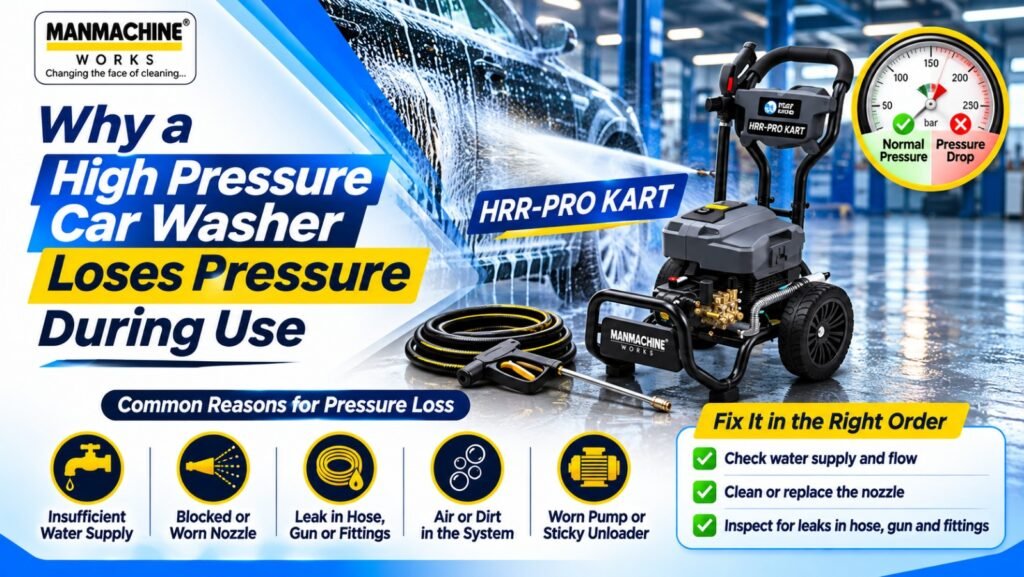
Why a High Pressure Car Washer Loses Pressure During Use
You squeeze the trigger and the water jet is strong. A few minutes later, it becomes weak or starts pulsing. The water that removed mud easily a moment ago now struggles to clean the surface.
If this sounds familiar, your high pressure car washer may be experiencing a pressure problem. In many cases, the cause is something simple, such as insufficient water supply, a blocked nozzle or a leaking hose.
Quick Answer: A high pressure car washer usually loses pressure because of insufficient water supply, a worn or blocked nozzle, hose leakage, air entering the system or a pump problem. Start by checking the water supply, inlet filter and nozzle. If the pressure remains low, have the pump and unloader valve inspected by a trained technician.
This guide explains why a high pressure car washer loses pressure during use, how to identify the cause and what you can do to reduce downtime.
At Manmachine Works, we supply car wash equipment for workshops, detailing studios and commercial washing centres. Understanding these common problems can help you maintain your machine and avoid unnecessary repairs.
Why Is Your Car Pressure Washer Losing Pressure?
Most pressure washer low pressure problems are related to five common causes.
- Not enough water entering the machine
- A worn or blocked nozzle
- Leakage from the hose, gun or connectors
- Air or dirt inside the system
- A worn pump or faulty unloader valve
Start by checking the water supply because it is one of the easiest problems to identify.
If the water supply is working properly, move on to the nozzle, hose connections and filters.
Pump-related problems should be checked by a trained technician.
How a High Pressure Car Washer Works in Simple Words
A high pressure car washer uses a pump to move water through a hose and nozzle.
The pump creates water flow, while the nozzle restricts that flow to produce a high-pressure jet.
For the machine to work properly, it needs a sufficient water supply, a properly functioning pump and a nozzle that matches the machine’s specifications.
If any part of this system develops a problem, the pressure can change.
For example, if less water enters the machine, the pump may not receive enough water to operate correctly. If the nozzle becomes worn, the opening may become larger and reduce the operating pressure.
Similarly, a leaking hose or worn pump components can affect the water pressure.
Every commercial pressure washer has two important specifications.
Operating Pressure: Usually measured in bar.
Water Flow Rate: Usually measured in litres per minute.
For example, the HRG Pro 21:15 ET is listed with a pressure of 150 bar and a water flow rate of 21 litres per minute.
This means the water supply must meet the machine’s inlet flow requirements. Always check the product manual for the correct operating specifications.
Steady Pressure Drop or Pulsing? Know the Difference
The way your machine loses pressure can help you understand the possible cause.
| What You Notice | What It May Mean | Possible Cause |
| Water pressure stays weak | The machine cannot maintain normal operating pressure | Worn nozzle, hose leakage or pump wear |
| Pressure rises and falls | Water flow or pressure regulation is unstable | Air in the system, insufficient supply or unloader problem |
| Pressure becomes weak after a few minutes | Water supply or machine performance changes during operation | Low tank level, restricted supply or overheating |
| Pressure drops when the trigger is pressed | The system cannot maintain the required flow under load | Blocked inlet filter, narrow hose or insufficient water supply |
These symptoms are useful clues, but they do not confirm the exact fault.
Common Pressure Washer Water Supply Problems
A high pressure car washer needs a steady water supply to maintain its operating pressure.
If the pump receives less water than required, it may produce weak pressure, unusual noise or an uneven spray.
Operating a machine with insufficient water can also damage the pump.
Check the following points:
- Make sure the water supply valve is fully open.
- Check whether the inlet hose is bent, twisted or blocked.
- Inspect the inlet filter for dirt.
- Make sure the storage tank contains enough water.
- Check whether other machines are using the same supply line.
- Inspect inlet connections for loose fittings or damaged seals.
- Confirm that the water temperature is within the machine’s permitted range.
How to Check Water Flow With a Bucket Test
A simple bucket test can help you estimate the water flow available from your supply line.
First, switch off the machine and disconnect the inlet hose according to the manufacturer’s instructions.
Place the hose into a suitable measuring bucket and open the water supply.
Measure how long it takes to fill the bucket.
For example, a machine requiring 21 litres per minute would need approximately 20 litres of water in 57 seconds.
However, this is only a basic flow check. It does not confirm that the supply has sufficient inlet pressure under operating conditions.
Always compare the result with the machine’s specified inlet requirements.
For commercial setups, proper tank capacity, pipe sizing and water supply planning are important.
Pressure Washer Nozzle Blockage and Worn Nozzles
The nozzle is a small part, but it plays an important role in maintaining pressure.
A worn nozzle can cause pressure loss because its opening becomes larger over time.
A blocked nozzle can also affect the spray pattern and cause unstable pressure.
Common signs include an uneven spray, reduced cleaning performance or a water jet that no longer looks normal.
Dirt, mineral deposits and small particles are common reasons for nozzle blockage.
What Should You Do?
Switch off the machine, isolate the water supply and release the pressure according to the manual.
Remove the nozzle only after the system is safely depressurised.
Clean it using the method and tools recommended by the manufacturer. Do not enlarge the opening with a nail, drill bit or other unsuitable object.
If the nozzle is damaged or worn, replace it with the correct size and type.
You can explore compatible pressure washer accessories, including nozzles and connectors, for your car wash setup.
Dirty Filters, Leaking Hoses, and Loose Fittings
A high pressure car washing machine depends on several connected parts.
Even a small problem with a filter, hose or fitting can affect performance.
Dirty Filters
A blocked inlet filter can restrict water entering the pump.
Inspect and clean the filter according to the machine’s maintenance schedule.
Leaking Hoses
Look for visible cracks, bulges, damaged fittings or water leakage.
Never use a damaged high-pressure hose. Do not attempt to repair it using ordinary tape.
Replace it with a hose rated for the machine’s operating pressure.
Loose Connectors
Worn O-rings and loose connectors may cause water leakage.
Replace damaged seals and use compatible fittings.
Spray Gun Problems
A damaged spray gun or worn internal seal may also cause pressure loss.
If the gun leaks or the trigger mechanism is damaged, stop using it until the problem is corrected.
Inspect hoses and fittings visually. Never use your hand to search for leaks in a pressurised system.
Air in the System
Air entering the water supply can cause a high pressure car washer to pulse or produce an uneven jet.
This may happen when the water tank runs low, a hose is replaced or an inlet connection is loose.
Air inside the system can affect water flow and pressure stability.
How to Fix It
First, check the water supply and inlet connections.
Then follow the manufacturer’s recommended priming or air-purging procedure.
Some machines require water to flow through the system before the motor is started.
Do not remove fittings or nozzles while the system is pressurised.
If the problem continues, the inlet line may need inspection for air leaks.
High Pressure Washer Pump Problems and What to Do
The pump is one of the most important components of a high pressure car washer.
If it becomes worn or damaged, the machine may struggle to maintain pressure.
Common warning signs include:
- Pressure gradually becoming weaker over time
- Unusual knocking or rattling noises
- Oil leaking from the pump
- Milky or cloudy pump oil
- Water leakage near the pump head
- Continued pressure fluctuation after checking the water supply and nozzle
These problems may be caused by worn seals, damaged valves, poor water supply, contamination or other internal faults.
How to Protect the Pump
Use clean water and maintain the inlet filter.
Check the pump oil level where applicable, following the manufacturer’s instructions.
Never run the machine without the required water supply.
Avoid changing pressure settings beyond the manufacturer’s recommendations.
If the pump produces unusual noise, leaks oil or continues losing pressure, stop using the machine and contact a qualified technician.
Unloader Valve, Power, and Heat
Sometimes the pressure problem is not caused by the nozzle or water supply.
Other machine components may also affect performance.
Unloader Valve
The unloader valve helps control system pressure and water flow when the spray gun is released.
If it becomes worn, blocked or incorrectly adjusted, the machine may experience pressure fluctuations.
Unloader valve inspection and adjustment should be handled by a trained technician.
Power Supply
An unstable electrical supply can affect motor performance.
If the motor overheats, trips repeatedly or makes unusual noises, stop using the machine.
Ask a qualified electrician or service technician to inspect the electrical system.
Heat
Some pressure washers can overheat if they remain running in bypass mode for too long.
Follow the manufacturer’s instructions for operating time and breaks.
Switch off the machine during longer interruptions when recommended.
Pressure Washer Troubleshooting: Check in This Order
If your high pressure car washer loses pressure during use, follow this simple troubleshooting sequence.
- Switch off the machine and safely release the pressure.
- Check the water supply and storage tank.
- Inspect the inlet hose for restrictions.
- Measure the available water flow.
- Clean the inlet filter according to the manual.
- Inspect and clean the nozzle.
- Check hoses, connectors and the spray gun for visible damage.
- Follow the recommended procedure for removing air from the system.
- Have electrical problems checked by a qualified professional.
- Contact a technician if the pump or unloader valve may be faulty.
Quick Troubleshooting Table
| Problem | Possible Cause | Recommended Action |
| Weak pressure from the start | Low water supply or worn nozzle | Check water flow and nozzle condition |
| Pressure drops after a few minutes | Low tank level or supply restriction | Inspect the water supply |
| Pressure keeps pulsing | Air, blocked filter or unloader issue | Check the inlet system and seek service if needed |
| Water leaks from a connector | Damaged O-ring or fitting | Replace the compatible part after depressurising |
| Uneven spray pattern | Blocked or worn nozzle | Clean or replace the nozzle |
| Knocking sound from pump | Internal pump problem | Stop the machine and call a technician |
| Motor trips repeatedly | Electrical fault or overheating | Stop operation and arrange professional inspection |
Commercial Car Pressure Washer – Extra Care for Daily Use
Commercial car wash machines often operate for several hours each day.
They may be used by different operators and exposed to frequent hose movement, water contamination and regular starting and stopping.
This makes routine maintenance especially important.
A few simple habits can help:
- Keep the water tank and inlet filter clean.
- Store hoses properly to reduce unnecessary wear.
- Keep compatible spare nozzles, O-rings and connectors available.
- Train operators to use and shut down the machine correctly.
- Record recurring faults and maintenance work.
- Follow the manufacturer’s service schedule.
If you are buying equipment for a new setup, read our guide on how to choose a car washing machine for business in India.
You can also compare different high-performance car wash machines based on operating pressure, water flow and commercial usage requirements.
Remember that higher pressure is not always better for every vehicle.
Our guide on water pressure for washing luxury cars explains why choosing a suitable washing pressure matters.
Car Washer Machine Maintenance: A Simple Schedule
Regular maintenance helps reduce avoidable pressure problems and equipment downtime.
The exact maintenance interval depends on the machine model, operating hours and manufacturer recommendations.
Use the following schedule as a general guide.
| Frequency | Maintenance Checks |
| Daily | Check water supply, inspect hoses, look for visible leaks and check the nozzle spray pattern |
| Weekly | Inspect inlet filters, O-rings, connectors, spray gun and electrical cable |
| Monthly | Review machine performance, check pump oil where applicable and inspect commonly used spare parts |
| As specified by manufacturer | Change pump oil, replace worn components and arrange scheduled servicing |
Do not change pump oil on a fixed monthly schedule unless the manufacturer recommends it.
For machines used heavily every day, maintenance may need to be more frequent.
When to Call for High Pressure Car Washer Repair
Some pressure washer problems require professional repair.
Stop using the machine and contact a technician if:
- Pressure remains low after basic checks.
- The pump produces knocking or grinding sounds.
- Oil leaks from the machine.
- Pump oil appears milky.
- Water leaks from the pump head.
- The motor repeatedly trips.
- There is a burning smell or another electrical warning sign.
Do not continue operating equipment with these symptoms.
A trained technician can inspect the pump, seals, valves, electrical system and other components.
Before arranging a repair, check the warranty terms for your particular machine.
If the machine is old and the repair cost is high, compare the repair estimate with the cost of replacement equipment.
Safety Notes
High pressure washers can cause serious injuries if used incorrectly.
Follow these basic precautions:
- Switch off the power and release pressure before inspecting or replacing components.
- Never point the spray gun at people or animals.
- Do not use damaged hoses, guns or connectors.
- Keep electrical connections away from water.
- Use the electrical protection recommended for the equipment.
- Wear suitable footwear and eye protection.
- Never check for high-pressure leaks using your hands.
- Follow the machine manufacturer’s operating and maintenance instructions.
Only trained personnel should work on internal pump components, electrical faults or pressure regulation systems.
Frequently Asked Questions
Why does a high pressure car washer lose pressure during use?
The most common causes are insufficient water supply, a blocked or worn nozzle, leaking hoses, air in the system and pump problems. Check the water supply first.
How do I fix a pressure washer low pressure problem?
Start by checking water flow, the inlet filter, nozzle condition and visible leaks. If pressure remains low, contact a technician to inspect the pump and unloader valve.
Why does my pressure washer pulse or surge?
Pressure fluctuation can happen because of air entering the system, restricted water supply, a blocked nozzle or an unloader valve problem.
How often should I service my machine?
Inspect the machine regularly and follow the manufacturer’s service schedule. Commercial machines used daily may require more frequent maintenance.
Is it safe to keep using a machine that is losing pressure?
Do not continue using a machine with unusual noises, damaged hoses, oil leaks or electrical faults. Stop operation and identify the cause before restarting.
Can I repair the pump myself?
Pump repairs should be handled by trained technicians. Incorrect repairs can damage the equipment and may affect the manufacturer’s warranty.
Final Thoughts
When a high pressure car washer starts losing pressure, the problem is often related to water supply, nozzles, hoses or filters.
Checking these parts regularly can help you identify common problems before they interrupt your daily washing work.
If the machine continues losing pressure after basic checks, do not ignore the warning signs.
Pump problems, electrical faults and unloader valve issues should be inspected by qualified technicians.
A good maintenance routine can help your car wash equipment work more reliably and reduce unnecessary downtime.
How Manmachine Works Can Help When Your High Pressure Car Washer Loses Pressure
A pressure washer that stops working properly can delay washing jobs and affect your daily operations.
At Manmachine Works, we offer commercial car wash machines and equipment accessories for workshops, detailing studios and car wash businesses.
You can explore our range of machines and compare their operating pressure, water flow and other specifications before choosing equipment for your business.
If your existing machine has pressure problems, our team can help you understand the available support options and suitable replacement components.
For product information or service-related enquiries, call +91 82-52-300-400 or contact Manmachine Works.
Choosing suitable equipment and following a proper maintenance routine can help keep your car wash operations running smoothly.